Robert Attenborough: The Private Scholar Behind a Famous Name
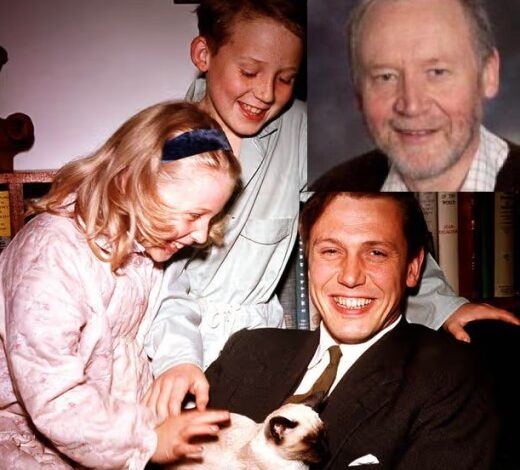
Most people first encounter the name Robert Attenborough because of his famous family, yet his real significance lies elsewhere. He has built a long academic career in biological anthropology, with work centred on human population biology, health, ecology and the Pacific. Public records show a figure who has deliberately stayed out of celebrity culture while developing a serious scholarly reputation in universities and research settings.
Who Is Robert Attenborough?
Robert Attenborough is a British biological anthropologist whose current public academic profile is tied to two major institutions. The University of Cambridge lists him as a Senior Fellow at the McDonald Institute for Archaeological Research, while the Australian National University lists him as an Honorary Senior Lecturer in the College of Arts and Social Sciences. Those two affiliations alone show the shape of his career: academically established, internationally connected and still active in his field.
He is also publicly identified as the son of Sir David Attenborough. A Canberra Times report refers to Sir David visiting Canberra to see “his son Dr Robert Attenborough”, then a senior lecturer in bioanthropology at ANU. That family connection explains public curiosity, but it does not explain his career. Unlike his father, Robert has made his name through research, teaching and academic programme-building rather than broadcasting or celebrity.
Robert Attenborough Age
Robert Attenborough was born August 1951 and is 74 years old, a British biological anthropologist known for his academic work in human population biology, health, and ecological research, particularly focused on Papua New Guinea.
Robert Attenborough and Family Background
What is publicly verifiable about his personal background is relatively limited. Companies House records identify Robert David Attenborough as British, with a birth date recorded as August 1951, and show that he has served as a director of David Attenborough (Productions) Limited since 18 February 1997. The same company records also list Sir David Attenborough and Susan Attenborough among the officers, which places Robert within the well-documented Attenborough family structure while also showing his link to the family’s business affairs.
Robert Attenborough’s Private Public Profile
One reason public interest in him remains high is precisely because he is not a public-facing figure. Unlike many people connected to famous families, he has kept his life largely within academic and institutional settings. The reliable public record says much more about his scholarship than about his private routine, friendships or domestic life. That contrast is part of what makes him interesting: he belongs to a globally recognised family, yet his visible identity is that of a researcher and teacher.
Robert Attenborough at ANU
The clearest picture of his professional life comes from his own historical chapter on biological anthropology at ANU. In that account, he states that he arrived at the university in 1981. He later explains that he retired in 2013, after more than three decades helping to build the discipline there. That timeline matters because it places him not as a peripheral lecturer, but as one of the central figures in the long development of biological anthropology at ANU.
Building Biological Anthropology with Robert Attenborough
At ANU, Robert Attenborough did far more than teach existing material. His chapter shows that he reshaped and expanded the curriculum. In 1981 he took responsibility for Human Variation; in 1982 he introduced Human Physiology and the Environment; and in the same year he launched Biological Perspectives on Human Social Behaviour. He also helped to create the Honours School in Biological Anthropology, approved in 1981 and implemented from 1982. These were not small administrative tweaks. They were foundation-level contributions to how the subject would be taught and understood.
Robert Attenborough’s Teaching, Supervision and Strategy
His ANU chapter also makes clear that he worked in a very small academic stream, initially with Colin Groves as one of only two core scholars carrying much of the teaching, honours supervision and disciplinary development. He describes helping to run honours preparation, thesis supervision and course coordination, while later also pressing for staffing growth in areas such as human genetics and skeletal biology. In other words, Robert Attenborough was not simply delivering lectures; he was helping to plan the future shape of the field.
Robert Attenborough’s Research in Papua New Guinea
Research is the other pillar of his career. In his ANU chapter, he explains that within a few years of arriving in Canberra he developed a sustained New Guinea research focus, and that the region remained his main regional interest after funded projects and co-edited volumes. The current ANU profile is consistent with that statement, saying that his most recent research has focused on health, nutrition and demography in Papua New Guinea. This continuity between older and current descriptions suggests a career shaped by long-term regional expertise rather than academic fashion.
His present Cambridge profile sharpens that picture further. It identifies his research expertise as Human Population Biology and Health and Human Evolutionary and Behavioural Ecology, and places his geographical focus in Oceania and the Pacific. These descriptions fit neatly with the ANU record and with his own retrospective account. Taken together, they show a scholar concerned with how human beings live, adapt, vary and remain vulnerable under changing environmental and social conditions.
Robert Attenborough at Cambridge and His Current Role
Today, Robert Attenborough is publicly listed by the University of Cambridge as a Senior Fellow at the McDonald Institute for Archaeological Research. The profile also notes that he is available for consultancy, which suggests that his expertise is regarded as practically useful as well as academically valuable. His listed fields, themes and regional focus show a scholar still clearly connected to biological anthropology, even after the end of his full-time ANU career.
Robert Attenborough Beyond a Famous Surname
What makes his career distinctive is that it stands on its own terms. Yes, he is the son of Sir David Attenborough, and yes, his name attracts curiosity because of that association. Yet the public evidence points to a man whose real legacy lies in research programmes, course design, honours education, interdisciplinary collaboration and long-term regional scholarship. Even his move into Cambridge after retiring from ANU appears in his own account as part of a continuing academic life rather than a symbolic family connection.
Why Robert Attenborough Still Matters
The most striking thing about Robert Attenborough may be his combination of influence and reserve. He helped establish and expand a university discipline, supervised students, shaped curricula, pursued New Guinea-centred research, remained active after retirement, and still holds a recognised position at Cambridge. Yet his public footprint remains modest. That balance gives him an unusual place in public culture: familiar by surname, but respected on the strength of his own scholarly work. For readers wanting the fullest credible picture, that is the essential truth about Robert Attenborough.
Frequently Asked Questions
Is there a Robert Attenborough Wikipedia page?
As of now, Robert Attenborough does not have a dedicated Wikipedia page. Most verified information about him comes from university profiles, academic publications, and official records rather than general encyclopaedia sources.
Is Robert Attenborough the son of David Attenborough?
Yes, Robert Attenborough is the son of Sir David Attenborough, the renowned British natural historian. However, unlike his father, he chose an academic career and has maintained a private, low-profile life.
What is Robert Attenborough’s career?
Robert Attenborough is a biological anthropologist and academic. He spent much of his career at the Australian National University, where he helped develop biological anthropology programmes. His research focuses on human population biology, health, and ecology, particularly in Papua New Guinea, and he is currently affiliated with the University of Cambridge.