Duncan Ferguson: The Fearless Football Giant Who Became an Everton Icon
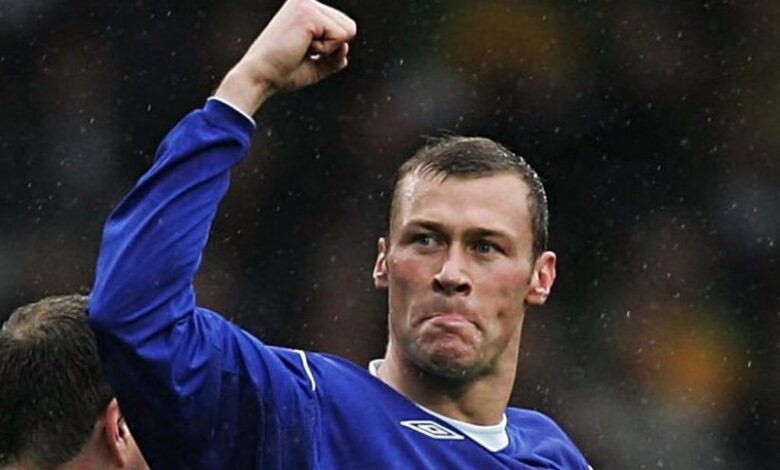
Duncan Ferguson was born in Stirling, Scotland, on 27 December 1971, and grew into one of the most recognisable centre-forwards of his era. Best known for his height, aggression, aerial strength and fierce presence, he built a career that made him unforgettable in both Scottish and English football. He is a Scottish football manager and former striker, and his full name is Duncan Cowan Ferguson.
Before the bright lights of major stadiums, he came through local football in Scotland and later attended Bannockburn High School. That grounding matters because his game always carried a raw, local, street-football edge. Even when he became a top-flight player, he never looked polished in the conventional sense; instead, he looked intimidating, direct and brutally competitive.
Duncan Ferguson Education
Duncan Ferguson is associated with Bannockburn High School, which connects his early education to his roots in Stirling, Scotland. This detail may seem small compared with his football fame, but it helps place his journey in a real and relatable setting. Before becoming known across Britain for his powerful style and larger-than-life character, he came from an ordinary school background like many others.
That educational connection also highlights how far he travelled from his early years into professional football. It links his success to a simple beginning and gives more depth to his life story, showing that his rise started long before the fame of Everton, Rangers or the Premier League.
Duncan Ferguson at Dundee United
His senior career began with Dundee United in 1990. There, he quickly developed from a promising young player into a genuine attacking threat. By the early 1990s he was scoring regularly, becoming the club’s top scorer in one season and earning wider attention for his power, work rate and ability to lead the line. Dundee United gave him the platform that turned promise into national recognition.
His performances for Dundee United also led to Scotland recognition. While he would only win seven senior caps, his rise at club level was fast enough to make him one of the country’s most talked-about young forwards. At that stage, he looked like a player with the size, courage and appetite to dominate defenders for many years.
Duncan Ferguson and the Rangers Transfer
In 1993, he moved to Rangers for £4 million, which was then a British record transfer fee. That deal showed how highly he was rated at a young age. Rangers expected a major forward who could deliver power, goals and presence, and the move instantly raised the pressure around him. It also confirmed that he was no longer simply a talent from Dundee United; he was now one of the most expensive British footballers of his time.
His Rangers period, however, is remembered for more than football. In 1994, he headbutted Raith Rovers defender John McStay during a match. Because of his prior assault convictions, the case was treated seriously by the court, and he received a three-month prison sentence in 1995. That punishment became one of the most famous and controversial episodes in British football history, and it shaped the public image that followed him for years.
Duncan Ferguson at Everton and Newcastle
If one club defines him most clearly, it is Everton. He first joined on loan in 1994 and later made the move permanent. His first spell, then his return after Newcastle United, turned him into a cult hero on Merseyside. He played for Everton across two different periods and retired there in 2006, which strengthened the bond between player and club.
He also spent time at Newcastle United between 1998 and 2000. Although that chapter is part of his story, Everton remained the place where his image became legendary. Across his Premier League career, he made 269 appearances and scored 68 goals. That total is especially notable because it stands as the highest Premier League goal tally by a Scottish player.
Duncan Ferguson and Everton Success
His biggest team honour as a player was the 1995 FA Cup with Everton. He was central to the side’s spirit and identity, giving them a physical edge and emotional lift during an important period. He was never just a goalscorer. He was the kind of striker who changed the mood of a stadium, unsettled defenders and lifted supporters through sheer force of personality.
At Everton, that influence mattered as much as statistics. He attacked crosses, bullied centre-backs and made every duel feel personal. Even today, his reputation is tied to commitment, courage and connection with the crowd. Many players are admired; fewer become symbols of a club’s fighting spirit. He did.
Duncan Ferguson and His Playing Style
He was a classic British centre-forward in some ways, yet more dramatic than most. He thrived in the air, welcomed physical contact and played on emotion. That same intensity also created problems. He collected nine red cards in his career, including eight in the Premier League, where he shares the competition record for dismissals. His football could be thrilling, but it could also be reckless.
That mix of brilliance and volatility is why he remains such a compelling figure. He was not tidy, smooth or predictable. Instead, he brought chaos, fear and momentum to matches. Supporters often love players who reflect emotion rather than control, and few embodied raw football feeling more than he did.
Duncan Ferguson as a Coach and Manager
After retiring, he moved into coaching and built a strong connection with Everton off the pitch as well. He worked through coaching qualifications, joined Everton’s first-team staff in 2014 and later served as caretaker manager in 2019 and again in 2022. Those spells showed that his relationship with Everton was much deeper than a former-player label. He became part of the club’s modern coaching history too.
He later stepped into full management with Forest Green Rovers in 2023 and then took charge of Inverness Caledonian Thistle later that year. Inverness appointed him in September 2023, and that move brought him back into Scottish football as a manager after decades away from the domestic game there.
His time at Inverness was difficult and ended in 2024, but it still added an important chapter to his managerial journey. It showed a willingness to test himself outside the comfort of Everton and to take responsibility in demanding circumstances. Management has not been straightforward for him, yet it has underlined his determination to remain in football.
Duncan Ferguson Book
Duncan Ferguson wrote his autobiography Big Dunc, published in 2022. The book reveals his football career, prison experience, Everton legacy, and personal struggles in a raw, honest and powerful narrative.
Duncan Ferguson Wife
Away from football, Duncan Ferguson is married to Janine Ferguson and is a father to three children: Cameron Ferguson, Ross Ferguson and Evie Ferguson. This part of his life shows a quieter and more personal side of a man often remembered for his fierce presence on the pitch. His family background adds balance to his public image and reminds readers that his story is not only about football, discipline and headlines.
His role as a husband and father helps present him as more than a former striker or manager. While much of his career was shaped by intensity and confrontation, his family life gives a more grounded view of who he is beyond the game.
Also Read:
Duncan Ferguson: The Fearless Football Giant Who Became an Everton Icon
Duncan Ferguson Net Worth
Duncan Ferguson’s exact net worth is not publicly verified. Online estimates vary widely, but they are unreliable; he was declared bankrupt in 2016 and has spoken about serious financial struggles since. Treat any figure as speculation, not fact today overall.
Also Read:
The Rise of Molly Thompson‑Smith: Britain’s Most Inspiring Climbing Champion
Conclusion
Duncan Ferguson’s legacy reaches far beyond goals, tackles and red cards. He remains an Everton icon, a memorable Scotland international and one of the most distinctive forwards of his generation. His strong personality, fearless playing style and lasting bond with supporters have made him a figure who still stands out in British football.
In later years, his story has continued through public appearances and his memoir Big Dunc, keeping interest in his life and career alive. He is remembered not because he was perfect, but because he was unforgettable: powerful, flawed, charismatic and impossible to ignore.
Also Read:
Ayao Komatsu: The Brilliant Formula 1 Leader Driving Haas Into a New Era
Frequently Asked Questions
Who is Duncan Ferguson?
Duncan Ferguson is a Scottish former professional footballer and football manager, renowned as a powerful striker and Everton cult hero, with a career spanning Dundee United, Rangers, Newcastle, and Everton.
How old is Duncan Ferguson?
Duncan Ferguson was born on 27 December 1971, making him 54 years old as of April 2026.
Is Duncan Ferguson married?
Yes, he is married to Janine Ferguson, and the couple have three children: Cameron, Ross, and Evie.
Also Read:
Emma Hayes: The Trailblazing Coach Redefining Modern Women’s Football