The 3 PM Battery Problem: How a Slim Power Bank Keeps Long Days on Track
A phone battery rarely runs out at a convenient moment. It tends to happen halfway through a train journey, while you are following directions, just before showing a digital ticket or when you still have several hours left before getting home.
For many people, the real problem is not that their phone cannot last a full day under ideal conditions. It is that a normal day is rarely ideal. Navigation, photography, video calls, music streaming, mobile payments and weak network coverage can all increase power consumption.
This is where a slim power bank can become a useful part of daily planning. Instead of treating portable charging as an emergency measure, you can use it to prevent the familiar mid-afternoon battery drop before it begins.
Why Phone Batteries Often Struggle After 3 PM
Modern phones can usually handle basic use for many hours, but battery life depends heavily on what you ask the device to do.
A quiet day at home may involve light messaging and occasional browsing. A day outside can be very different. Your phone may need to search for a mobile signal, increase screen brightness, provide turn-by-turn directions and keep several apps active in the background.
Common battery-draining activities include:
- Using maps for a long journey
- Recording photos and videos
- Streaming music or podcasts
- Joining video calls
- Sharing a mobile hotspot
- Scanning tickets or QR codes
- Using contactless payments
- Refreshing travel and event apps
Individually, these activities may not seem demanding. Combined over several hours, however, they can leave a phone close to empty by late afternoon. The answer is not necessarily to stop using useful features. A better approach is to plan one or two short charging periods during the day.
Stop Waiting for the Low-Battery Warning
Many people only reach for a portable charger when their phone drops below 10%. By then, battery anxiety has already started. A more practical routine is to charge earlier. Connecting a power bank when the phone reaches 30% or 40% can provide a useful top-up while you are sitting on a train, having lunch or waiting for a meeting.
This approach has several advantages. You do not need to remain beside a wall socket, your phone stays available for essential tasks and you reduce the risk of reaching a critical battery level later. Think of portable charging as filling a gap rather than completing a full recharge. Even a short charging session can be enough to keep maps, messages and digital payments available until you return home.
Match Your Charging Plan to Your Schedule
Before leaving home, look at the shape of your day. If you are travelling directly to the office and will have easy access to a charger, you may not need additional power. If you are commuting, attending appointments, meeting friends and returning home late, carrying backup power becomes more sensible.
A simple charging plan might look like this:
- Start the day with your phone and power bank charged.
- Use your phone normally during the morning.
- Add a top-up during lunch or an afternoon journey.
- Keep the remaining capacity available for the evening.
- Recharge the power bank after returning home.
This routine is particularly useful when your schedule includes several locations. The more often you move between trains, cafés, offices, shops and outdoor spaces, the less predictable access to sockets becomes.
Why a Slim Shape Matters During a Long Day
Capacity is only useful when the power bank is actually with you. Larger models may offer plenty of energy, but they can also take up valuable room in a smaller bag. If carrying one feels inconvenient, it may stay in a drawer on the day you need it most.
A Slim Power Bank is designed to reduce that barrier. Its flatter form can fit more naturally beside a phone, wallet, notebook or pair of earbuds. This makes it easier to include in a work bag, backpack or compact crossbody bag without reorganising everything else.
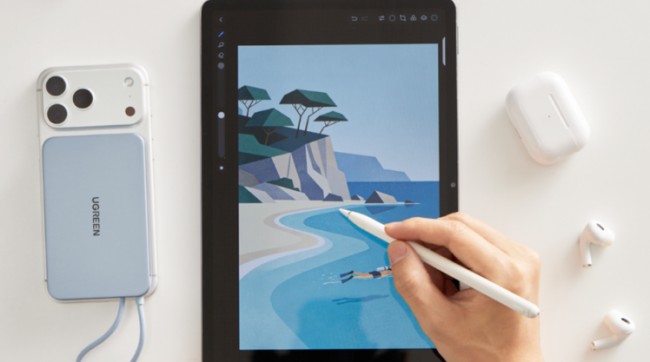
The UGREEN MagFlow Air model combines a slim format with a 10,000mAh capacity. It is intended for people who want useful backup power in a shape that is easier to include in an everyday setup. The practical benefit is not simply owning a smaller accessory. It is being more likely to take that accessory with you consistently.
Magnetic Charging Can Simplify Top-Ups
Traditional portable charging often means finding a cable, connecting both devices and managing them while they sit separately in a bag or on a table. Magnetic charging can make short top-ups easier. A compatible phone can attach directly to the power bank, reducing the need for a loose cable during everyday use.
The UGREEN UK model supports Qi2 15W magnetic wireless charging. This can be useful when you want to continue using your phone while adding power, such as when checking directions, reading messages or viewing travel information. A cable can still be worth carrying for other devices or charging situations. However, magnetic charging gives you another option when speed of access and convenience matter.
Anyone comparing different formats can also review the key factors involved in choosing the best slim power bank for iPhone, travel and daily carry, including portability, charging method and how easily a model fits into a normal routine.
Build a Small Charging Kit
A portable charging setup does not need to contain several cables and adapters.
For most daily journeys, a compact kit may include:
- One slim power bank
- One reliable charging cable
- A small pouch or dedicated bag pocket
- A wall charger for longer trips
Keeping these items together makes them easier to find. It also reduces the chance of leaving home with the power bank but forgetting the cable required for another device. Avoid storing the power bank loose beside keys, coins or other hard objects. A dedicated compartment helps keep your technology organised and protects it from unnecessary scratches.
It is also worth checking whether your bag layout makes the power bank easy to reach. If it sits underneath a laptop, coat and several other items, you may avoid using it until the battery warning becomes urgent. A front compartment, internal organiser or small technology pouch is usually more practical.
Check the Power Bank Before Important Days
Carrying an empty power bank creates a false sense of security. A simple checking routine can prevent this.
Review its charge level before:
- A long train journey
- A day at a festival or event
- A flight or airport transfer
- A full day of meetings
- A sightseeing trip
- An evening out after work
- A day involving heavy map use
You can also connect recharging to an existing habit. For example, recharge the power bank when you charge your phone overnight or when you pack your work bag. UGREEN UK can provide the hardware, but consistent habits determine whether portable charging is useful in practice.
Use Power More Intentionally When You Are Out
A power bank gives you more flexibility, but it is still sensible to manage phone settings during demanding days. Reducing screen brightness, closing unnecessary apps and downloading maps before travelling can help preserve battery life. Switching off features you are not using can also reduce background activity.
These steps do not replace portable charging. Instead, they help the available power last longer, particularly when you expect to be away from a socket from morning until late evening. The aim is not to monitor every percentage point. It is to avoid the sudden moment when an essential device becomes unavailable.
Consider the Type of Day You Are Preparing For
Not every day requires the same charging strategy. A normal commute may only require one brief top-up. A festival, airport journey or sightseeing day may involve much heavier phone use. You may be taking more photos, checking transport updates and spending longer away from indoor charging points.
This is where a 10,000mAh model can offer a practical balance between usable backup power and everyday portability. The slim design matters because it supports regular use rather than occasional use. When an accessory fits comfortably into your usual bag, it is easier to make it part of your routine. That consistency can be more valuable than choosing a larger device that you rarely carry.
Do Not Treat Portable Charging as a Last Resort
The most useful shift is psychological. A power bank should not only appear when your phone reaches a critical level. It can be used earlier, during the natural pauses already built into your day. Charge while sitting on a train. Add power during lunch. Use a short waiting period before an appointment. These small opportunities can prevent the much larger inconvenience of losing access to maps, tickets, payments or communication later.
By treating portable charging as routine maintenance, you reduce stress without having to change how you use your phone.
Conclusion
The 3 PM battery problem is usually caused by the way people use their phones throughout a busy day, not by one unusually demanding task. Navigation, communication, entertainment and digital payments gradually consume power, especially when you are moving between locations. Waiting until the battery is almost empty makes the situation more stressful than it needs to be.
A slim power bank supports a more proactive approach. Its portable shape makes it easier to carry, while a 10,000mAh capacity and Qi2 15W magnetic charging can support convenient top-ups during travel, work and time away from home. The most useful charging routine is simple: start prepared, add power before the battery becomes critical and recharge your equipment when the day is over.