Charlotte Faircloth: The Influential UCL Professor Shaping Modern Conversations on Parenting, Reproduction and Family Life
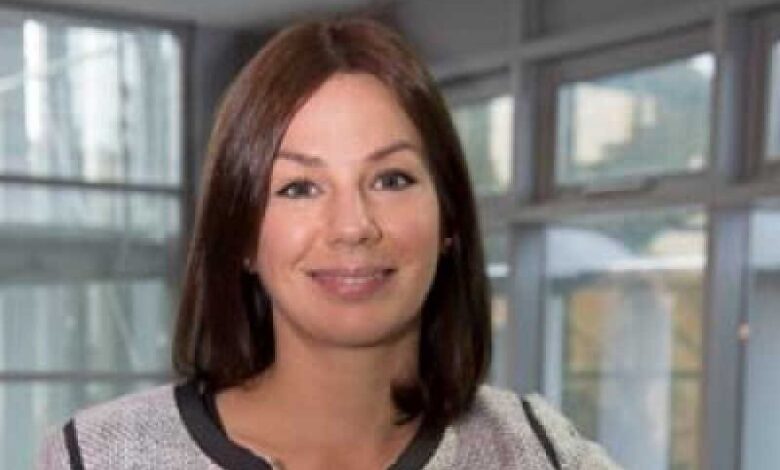
Charlotte Faircloth is one of the most respected British academics working in the fields of family life, parenting, gender and reproduction. Based in London, she has built a strong reputation through her research, teaching, public commentary and leadership in higher education. Her work brings together sociology, social anthropology and social policy, allowing her to explore how personal family experiences are shaped by wider cultural expectations and social change.
Known for her thoughtful and evidence-based approach, Charlotte Faircloth has become an important voice in debates around motherhood, childcare, infant feeding, couple relationships and reproductive life. She is especially recognised for examining how modern parents are expected to make the ‘right’ choices for their children, often under intense public scrutiny. Her research has helped explain why parenting has become such a morally charged issue in contemporary society.
Charlotte Faircloth and Her Current Role at UCL
Charlotte Faircloth is Professor of Family and Society at the UCL Social Research Institute. She is also Co-Director of the Thomas Coram Research Unit, a well-known centre focused on children, families and social research. In addition, she is one of the directors of the UCL Centre for Human Reproduction, where she leads Repro@UCL, a network for scholars in the social sciences and humanities working on reproduction in its broadest sense.
These roles reflect the breadth of her academic influence. She is not only a researcher and teacher, but also an organiser of major scholarly work across disciplines. Her position at UCL places her at the heart of research into how family life is changing in Britain and beyond.
Her career at UCL has developed over time. Earlier profiles described her as a lecturer and later as an associate professor. More recent information shows that she was promoted to Professor in October 2025, marking a major step in her academic journey. This progression illustrates long-standing recognition of her scholarship and leadership.
Charlotte Faircloth: Education and Academic Background
Charlotte Faircloth has a strong academic foundation. She completed her PhD in Social Anthropology at the University of Cambridge. Her doctoral work explored women’s experiences of attachment parenting and full-term breastfeeding in London and Paris, a subject that would go on to shape much of her later research.
Her qualifications also include an MA (Hons) in Archaeology and Anthropology, an MPhil in Social Anthropological Research and a PGCHE. This combination of training in anthropology and higher education has supported both her research depth and her teaching career.
Her early academic interests were rooted in close, qualitative study of everyday life. Rather than treating family matters as simple private choices, she approached them as social practices shaped by culture, values, class, gender and public debate. This has remained a defining feature of her work.
Charlotte Faircloth and Her Research Interests
Charlotte Faircloth on Parenting Culture
A central part of her work examines parenting culture, especially the pressures placed on mothers and fathers in modern society. She has explored how parents are encouraged to see every decision as highly significant, from feeding and sleeping routines to emotional bonding and child development. Her research often asks why parenting has become so intensive and why so many family practices are judged in moral terms.
She is widely associated with parenting culture studies, an area of scholarship that looks at how social ideas about good parenting are created, spread and defended. This includes attention to expert advice, media debates and the language parents use to explain their choices.
Charlotte Faircloth on Gender and Care
Another major theme in her research is gender. She has studied how caring responsibilities are distributed within families and how expectations around motherhood and fatherhood continue to shape domestic life. Her work considers how equality in care is discussed in theory and experienced in practice.
This includes interest in how couple relationships change after children arrive, how care work is valued and how family responsibilities can affect women’s lives more heavily than men’s. Her perspective is both sociological and anthropological, giving her work a strong interpretive quality.
Charlotte Faircloth on Reproduction and Family Change
Reproduction is also a key area of expertise. She has worked on questions related to fertility, childbirth, motherhood and the social meanings attached to reproductive choices. More recently, she has been involved in research networks and projects that address reproduction in a broad and interdisciplinary way.
Her work is important because it shows that reproduction is not only biological or medical. It is also deeply social, shaped by institutions, expectations, policy and culture.
Charlotte Faircloth and Her Major Publications
Charlotte Faircloth is the author of Militant Lactivism? Attachment Parenting and Intensive Motherhood in the UK and France, a notable book that explores long-term breastfeeding, attachment parenting and the moral narratives surrounding child-centred care. The book helped establish her as a serious scholar of motherhood and parenting practices.
She has also co-authored and co-edited several important volumes, including Parenting Culture Studies, Parenting in Global Perspective and Feeding Children Inside and Outside the Home: Critical Perspectives. Across these works, she has consistently examined the ways in which parenting is tied to identity, social pressure and cultural ideals.
In addition to books, she has produced many journal articles and chapters on infant feeding, family relationships, care, reproduction and parenting ideology. Her scholarship is valued because it combines theoretical depth with clear relevance to everyday life.
Charlotte Faircloth and the Study of Attachment Parenting
How Charlotte Faircloth Explored Infant Feeding
One of her best-known areas of study is attachment parenting, including breastfeeding ‘to full term’, bed-sharing and baby-wearing. In this research, she examined how mothers justified their choices as doing the best for their children, even when they faced public criticism.
She showed that feeding practices are not seen as neutral. They are often used as signals of what kind of mother someone is. In this way, parenting becomes closely linked to identity. Her work highlights how women may frame their actions as selfless and child-centred while also using those practices to build and defend a moral sense of self.
Why Her Work Matters
This research matters because it goes beyond the surface of parenting debates. Rather than simply asking whether a practice is right or wrong, it asks why some choices become controversial, why mothers feel judged and why childrearing has become a site of public scrutiny. Her writing has helped many readers understand the emotional and moral pressure that can surround family life.
Charlotte Faircloth’s Current Projects and Public Impact
Charlotte Faircloth is currently leading a major UKRI-funded study titled 50 Years of Becoming a Mother, alongside colleagues including Ann Oakley and Meg Wiggins. This project revisits a landmark study from the 1970s and offers a valuable chance to compare how motherhood has changed across generations.
She has also examined the impact of coronavirus on family life, reflecting her interest in how large social events reshape private relationships, caring roles and domestic routines. Her work remains highly relevant because it connects individual experience with social transformation.
Beyond academia, she regularly contributes expert commentary to media outlets such as BBC News, Channel 4 News, Newsnight, Woman’s Hour, PM, The Times and The Guardian. This public role has helped bring serious social research into wider national discussion.
Charlotte Faircloth’s Other Professional Roles
Her influence extends beyond UCL. She is a founding member and associate of the Centre for Parenting Culture Studies at the University of Kent and is also connected with ReproSoc in Cambridge. She serves on the editorial board of Families, Relationships and Societies, showing her involvement in shaping scholarly debate in her field.
She is also a trustee and director linked to Coram Family and Childcare, reflecting her practical engagement with organisations concerned with children and families. This balance of academic and governance work strengthens her standing as a public intellectual in family and social research.
Amol Rajan Wife Charlotte Faircloth
Charlotte Faircloth is British and was born in August 1982. She is married to Amol Rajan, the well-known journalist and broadcaster, and they married in 2013. Public reporting indicates that they have four children.
Her personal life has occasionally drawn public interest because of her husband’s media profile and because of public discussion of their family’s IVF journey. That said, her own reputation stands firmly on her academic achievements, which are substantial in their own right.
Charlotte Faircloth Amol Rajan Wedding
Charlotte Faircloth and Amol Rajan married in September 2013 in Cambridge. Their wedding details have remained largely private, reflecting the couple’s preference to keep family milestones out of public view.
Also Read:
Ros Atkins: The Calm, Clear Voice Transforming Modern BBC Journalism
Why Charlotte Faircloth Matters Today
Charlotte Faircloth matters because she has helped make sense of some of the most emotionally charged questions in modern life. How should children be raised? What counts as a good parent? Why do mothers carry so much social pressure? How do reproduction and care shape identity? These are not small questions, and her work addresses them with intelligence, nuance and humanity.
At a time when family life is constantly discussed in media, politics and everyday conversation, her scholarship offers something rare: careful analysis without sensationalism. She shows that parenting and reproduction are not merely personal matters, but windows into wider social values.
Also Read:
Aamer Anwar: Scotland’s Fearless Human Rights Lawyer and Public Inquiry Advocate
Final Thoughts
Charlotte Faircloth stands out as an influential academic voice in Britain today. As a professor, researcher, author, commentator and leader at UCL, she has made an important contribution to understanding family life in the modern world. Her work on parenting culture, gender, infant feeding and reproduction has helped shape both academic thought and public debate.
For anyone seeking to understand contemporary parenting and the pressures surrounding family life, her work remains highly relevant, insightful and deeply informative.
Also Read:
Mason Soiza: From Digital Marketing Roots to Controversial Tech Entrepreneur
Frequently Asked Questions
Who is Charlotte Faircloth?
Charlotte Faircloth is a British academic and social scientist. She is Professor of Family and Society at UCL and Co-Director of the Thomas Coram Research Unit. Her research focuses on parenting, gender, reproduction and family life.
How old is Charlotte Faircloth?
Charlotte Faircloth was born in August 1982, so she is 43 years old as of April 2026.
Is Charlotte Faircloth married?
Yes, Charlotte Faircloth is married to Amol Rajan, the British journalist and broadcaster. They married in 2013.
Also Read:
Robert Attenborough: The Private Scholar Behind a Famous Name