How AI Image Generators Are Changing the Way Thumbnails Are Created for Video Content
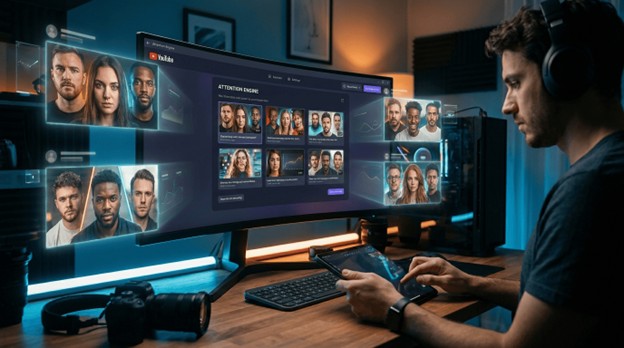
The digital attention economy has reached a tipping point. Every day, millions of videos are uploaded across platforms like YouTube, LinkedIn, and TikTok. For creators and brands, the challenge is no longer just producing high-quality video. The primary hurdle is the click-through rate (CTR).
A video can have world-class production values, but if the thumbnail fails to stop the scroll, the content remains invisible. Traditionally, creating these tiny billboards required a complex mix of graphic design, professional photography, and expensive software. This process often took hours or even days.
The emergence of artificial intelligence has fundamentally disrupted this workflow. Creators are no longer bound by the limitations of their camera gear or their personal design skills. Instead, they are moving toward a model where imagination and strategic prompting define the visual identity of their content.
The Friction of Traditional Thumbnail Production
Before the rise of specialized AI tools, creators faced a significant bottleneck. A professional thumbnail required high-resolution assets. If a creator forgot to take a specific “reaction photo” during a shoot, they were often out of luck. They would have to settle for a blurry screenshot or stage an entirely new photo session.
Furthermore, traditional graphic design tools have a steep learning curve. Manipulating lighting, removing backgrounds, and compositing multiple elements into a cohesive image is time-consuming. For digital agencies managing dozens of accounts, this manual labor is simply not scalable.
The industry needed a solution that offered both speed and professional fidelity. Using an advanced ai image generator allows marketers to bypass the high costs of photography. This shift is not just about saving money. It is about the ability to test dozens of different visual concepts in the time it used to take to create one.
The Deep Dive: How AI Image Generation Changes the Landscape
The modern ai image generator has evolved from a novelty into a commercial necessity. Early iterations of AI art were often characterized by “hallucinations” or visual artifacts. This made them unsuitable for professional brands that require clean, sharp imagery.
Today, the landscape is defined by specialized engines. Models like Higgsfield Soul are designed specifically for professional aesthetics. They prioritize realistic skin textures, accurate lighting, and cinematic compositions. This is a far cry from the generic, overly stylized output of basic generators.
The shift is driven by three core technological advancements:
- High-Fidelity Realism: Modern models can now generate images that are indistinguishable from studio photography.
- Character Consistency: This is perhaps the most important breakthrough for creators. Tools like Soul ID allow a brand to maintain the same face across multiple thumbnails, building a recognizable visual identity.
- Complex Composition Control: Pro-grade tools allow users to dictate exactly where elements should be placed, ensuring the thumbnail follows established psychological triggers for engagement.
According to a study on the evolution of digital production, the integration of these tools is fundamentally altering how creative teams allocate their budgets. AI is not replacing creativity but rather accelerating the cycle of experimentation.
Solving the Text Rendering Problem
One of the biggest complaints regarding any standard ai image generator was its inability to handle text. For a thumbnail, text is vital. It provides context and a “hook” that complements the visual.
In the past, designers had to generate an image and then bring it into another program like Photoshop or Canva to add text. This added another step to the workflow. New engines like Nano Banana Pro have solved this by offering flawless text rendering within the image itself.
This means a creator can prompt for a “cyberpunk cityscape with a neon sign that says NEW TECH” and the AI will produce legible, brand-accurate typography. This level of technical precision is what separates hobbyist toys from commercial-grade production engines.
Strategic Tips for AI-Driven Thumbnail Creation
To succeed in the current market, creators must treat an ai image generator as a strategic partner. It is not enough to simply type a prompt. You must understand the psychology of visual storytelling.
Here are four actionable strategies for using AI to boost your video performance:
- Leverage Emotional Extremes: AI allows you to generate hyper-expressive characters that might be difficult to capture on camera. Use these to trigger an immediate emotional response from the viewer.
- Contrast and Color Grading: Professional tools allow for brand-accurate color palettes. Ensure your thumbnail uses high-contrast colors that pop against the dark mode or light mode interfaces of social platforms.
- Narrative Consistency: Use character consistency tools to ensure the person in your thumbnail looks exactly like the person in your video. This builds trust and reduces “clickbait” frustration.
- Format Variation: Do not stop at one image. Generate 10 to 20 variations and use A/B testing tools to see which visual resonates most with your specific audience.
Integrating Higgsfield into Your Professional Workflow
For digital agencies and creative studios, the goal is repeatability and scalability. This is where higgsfield positions itself as the pro-grade solution for the AI era. While other platforms offer a generic ai image generator experience, higgsfield provides a unified studio environment designed for commercial output.
The platform integrates several top-tier models into a single ecosystem. Creators can choose Higgsfield Soul for high-end aesthetics or Seedream for more creative, abstract concepts. For those who need absolute precision with brand assets, the Nano Banana Pro engine ensures that every pixel of text is professional and legible.
One of the key advantages of using higgsfield is the seamless path from image to video. A creator can generate a 4K, studio-quality thumbnail and then use the same assets to create high-resolution promotional clips. This eliminates the need for multiple subscriptions and fragmented workflows.
The Power of Commercial Readiness
In a professional setting, “good enough” is not an option. Brands need assets that are ready for 4K displays and high-stakes ad campaigns. The higgsfield platform was built with this “commercial readiness” in mind.
The inclusion of tools like the Virality Predictor helps creators move beyond guesswork. By analyzing visual trends, the platform can guide the user toward compositions that are more likely to perform well on social media.
Furthermore, the ability to recreate viral ad references or generate 40 different ad formats in seconds allows small teams to compete with global agencies. This is the democratization of cinematography. Professional production is no longer gated by million-dollar budgets.
Also Read:
EnerStor: Romania’s Rising Force in Solar Power, Energy Storage and Smarter Energy Independence
The Future of Thumbnail Design
As we look toward the future, the role of the ai image generator will only expand. We are moving toward a world where thumbnails might be personalized for individual viewers in real-time. A viewer who prefers high-action visuals might see a different thumbnail than one who prefers minimalist design, even for the same video.
For now, the competitive edge belongs to those who master the tools of the current era. By utilizing higgsfield, creators can ensure they are not just keeping up with the trend, but setting the standard for visual quality.
The transition from manual design to AI-assisted creation is the most significant shift in digital marketing since the invention of the smartphone camera. By embracing a professional ai image generator, you are investing in a workflow that values speed, precision, and high-performance results.
In conclusion, the era of “good enough” thumbnails is over. With the power of higgsfield and its suite of professional models, creators have everything they need to dominate the digital landscape. Whether you are a solo creator or a high-volume agency, the ability to generate commercial-grade visuals at scale is no longer a luxury: it is a requirement for survival in the modern attention economy.
Also Read:
How AI Video Is Turning Product Descriptions Into Scroll-Stopping Content