Laura Kuenssberg: The Powerful Rise of Britain’s Defining Political Journalist
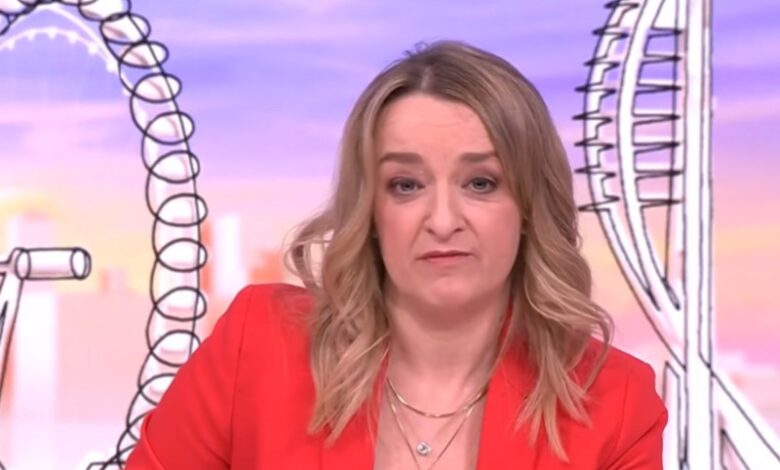
Laura Kuenssberg has become one of the most recognisable names in modern British journalism. Known for her sharp political reporting, calm on-screen presence and ability to explain fast-moving national events, she has built a career at the centre of public life. From Westminster reporting to major BBC presentation roles, her work has shaped how millions of people understand politics in the United Kingdom.
What makes her stand out is not simply visibility, but influence. She was the first woman to serve as BBC News political editor, and she later moved into a flagship Sunday politics role that placed her at the heart of weekly national debate. Her career reflects persistence, authority and an ability to adapt across reporting, presenting, interviewing and documentary work.
Laura Kuenssberg: Early Life and Background
Laura Juliet Kuenssberg was born on 8 August 1976 in Rome, Italy. Although she was born outside Britain, she was raised in Glasgow, Scotland, and developed the outlook and confidence that would later define her public career. Her upbringing combined an international background with strong Scottish roots, something often noted in accounts of her early life.
She comes from a family with a strong professional and public-service background. Her parents are Nick Kuenssberg and Sally Kuenssberg, and she has two siblings, Joanna Kuenssberg and David Kuenssberg. Public biographies also note the wider distinction of her family, but it is her own career path that has brought her lasting prominence in British media.
Laura Kuenssberg and Her Education
Her academic path helped prepare her for serious journalism. She studied at the University of Edinburgh, where she read history and graduated with a first-class MA. During her university years, she also studied at Georgetown University in Washington, DC, a period that widened her political and media perspective. Accounts of her education also note a period at the British Institute in Paris.
This educational background is important because it reveals the foundation of her professional style. History gave her a long view of politics, while study in the United States exposed her to another political culture and broadcasting environment. That blend helped shape a journalist able to move between detail, context and live analysis with confidence.
Laura Kuenssberg Career Journey
Her rise in journalism was not sudden. She began her BBC career in regional reporting and quickly built a reputation for clarity and determination. Early in her working life, she served as home affairs correspondent for BBC North East and Cumbria, and she later worked as a producer and presenter within the BBC system. These early years gave her experience in editorial judgement, live broadcasting and political storytelling.
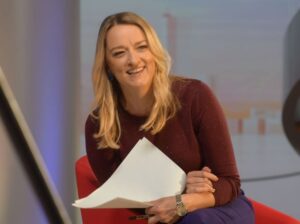
She went on to present and report for programmes including The Daily Politics. This period helped strengthen her public profile and sharpen her style as a journalist who could both report events and interpret them for a broad audience. By the late 2000s, she had become one of the BBC’s most visible political reporters.
Laura Kuenssberg at BBC News and ITV News
In 2009, she became chief political correspondent for the BBC, a major step that placed her close to the centre of national political coverage. Her reporting during the 2010 general election period was so prominent that commentators joked about how often she was on screen. That visibility reflected not celebrity for its own sake, but trust from editors during an intense political period.
She later left for ITV News, where she became its first business editor. This was an important shift because it demonstrated that her strengths were not limited to one newsroom or one narrow beat. After ITV, she returned to the BBC as chief correspondent and presenter on Newsnight, adding another prestigious role to an already impressive record.
Laura Kuenssberg as BBC Political Editor
The defining milestone in her career came in July 2015, when she was appointed political editor of BBC News. This made her the first woman to hold the role, a historic achievement in British broadcasting. The position carried enormous responsibility, as the political editor is expected to lead coverage of governments, elections, parties and crises with speed and authority.
During her time in that post, she covered some of the most turbulent years in recent British politics. Brexit, general elections, leadership contests, constitutional arguments and rapid changes of prime minister all fell within her period of coverage. Whether admired for toughness or criticised for prominence, she remained central to the national political conversation.
Laura Kuenssberg and the Pressure of Political Journalism
Political journalism at this level demands more than reporting facts. It requires handling pressure, judging sources, questioning powerful figures and explaining complex events at speed. Her years as political editor showed those demands in full. She became associated with a style of reporting that was direct, highly informed and frequently at the centre of public debate.
That visibility also came with criticism, which is common for journalists operating at the highest political level. Yet criticism itself shows how central her work became. Reporters who matter are often scrutinised closely, and her career demonstrates both the influence and the strain that come with occupying one of the BBC’s most prominent political posts.
Also Read:
Felicity Simper: Celebrated BBC Journalist and East Anglian Personality
Laura Kuenssberg as Presenter, Interviewer and Documentary Maker
After stepping down as political editor in 2022, she moved into a new phase of her career by becoming the presenter of Sunday with Laura Kuenssberg on BBC One. This role allowed her to shift from daily political editing into long-form interviews, discussion and weekly agenda-setting. It also confirmed that she remained one of the BBC’s leading political figures even after leaving her previous post.
Her public profile also includes documentary work. Publicly listed projects associated with her include political documentaries and major interview-led broadcasts, showing that her work extends beyond studio presentation alone. That range helps explain why she is often described not only as a journalist, but also as a presenter and documentary maker.
Laura Kuenssberg and New Projects
In 2026, reports indicated that she was writing her first book, to be published by Corsair, an imprint of Little, Brown. This suggests another expansion of her professional identity, from broadcaster to author. For a journalist who has spent years recording political events in real time, the move into book writing feels like a natural development.
The significance of this step is not merely commercial. It points to a journalist entering a more reflective stage of her career, one in which experience gained from years in Westminster can be shaped into longer-form analysis and storytelling. That broadening of format keeps her relevant in a media world that increasingly values cross-platform voices.
Laura Kuenssberg Personal Life and Public Image
Public information about Laura Kuenssberg’s personal life is relatively limited, which is not unusual for a journalist whose role is to report on others rather than become the focus herself. It is publicly known that she is married to James Kelly, a management consultant. She has largely kept her private life out of the spotlight, allowing her professional work and journalistic credibility to remain at the centre of public attention.
In addition to her broadcasting career, she maintains a presence on social media under her professional handle, which aligns with her work at the BBC. Her accounts connect audiences to her television programmes, on-demand content, and audio platforms such as political podcasts. This digital presence reflects her role as a modern journalist who operates across multiple media formats while maintaining a consistent and professional public image.
Why Laura Kuenssberg Matters in British Media
Her importance lies in more than a list of job titles. She represents a model of modern political journalism in which reporting, presentation, analysis and public visibility all combine. She has covered major democratic moments, interviewed key political figures and helped set the tone for political discussion on national television.
She also matters because her career marks institutional change. Becoming the first woman in the BBC political editor role was not only a personal achievement, but also a sign of a shifting media culture. Her continued prominence since then shows that she did not simply break a barrier; she remained influential long after crossing it.
Nick Eardley: Inside the Career, Background and Public Profile of the BBC Political Correspondent
Conclusion
Laura Kuenssberg remains one of the defining political journalists of her generation. From her education at the University of Edinburgh and Georgetown University to senior roles at the BBC, ITV News and Newsnight, she has built a career marked by authority, adaptability and national impact. Her work as political editor, presenter and documentary maker places her firmly among the most important public broadcasters in the United Kingdom.
Also Read:
Janine Machin: The Remarkable Rise of a BBC Correspondent, Presenter and Storyteller
Frequently Asked Questions
Who is Laura Kuenssberg?
Laura Kuenssberg is a British journalist and presenter. She is best known for serving as the BBC’s political editor from 2015 to 2022 and currently presents the Sunday morning politics programme on BBC One.
How old is Laura Kuenssberg?
She was born on 8 August 1976, which makes her 49 years old as of 2026.
Is Laura Kuenssberg married?
Yes, she is married to James Kelly, a management consultant.
Does Laura Kuenssberg have children?
No, according to available public information, she does not have children.
What is Sunday with Laura Kuenssberg?
It is a weekly political programme on BBC One where she interviews leading politicians and discusses major national and international issues.