Catherine Fassbender: The Accomplished Academic Behind a Distinguished Family Name
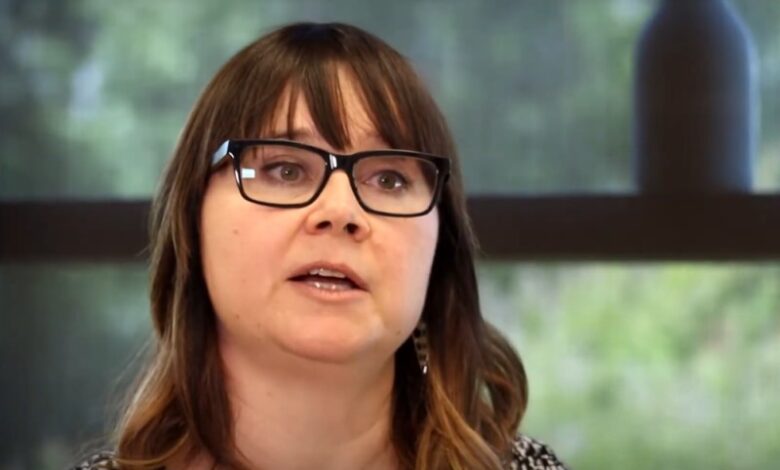
Catherine Fassbender is an accomplished academic, researcher, and university lecturer whose professional work stands firmly on its own merit. While some readers first become curious about her because of the Fassbender family name, her own career reflects years of serious scholarship, international research experience, and a strong commitment to psychology and cognitive neuroscience. Her journey from Irish universities to major research institutions in the United States, and then back to Ireland, presents a rich and impressive professional story.
Unlike people who gain public attention through entertainment or celebrity culture, Catherine Fassbender has built her reputation through academic excellence. Her work has focused on important areas such as cognitive control, ADHD, substance abuse, relapse risk, and adolescent behavioural health. This makes her not only an interesting public figure by association, but also an important scholar in her own right. For anyone searching for meaningful information about Catherine Fassbender, it is clear that her academic record, research leadership, and teaching profile deserve close attention.
Catherine Fassbender and Her Academic Identity
Catherine Fassbender is a doctor of cognitive neuroscience and an academic member of the School of Psychology at Dublin City University. She serves as an Assistant Professor in Psychology and is also associated with wider academic leadership responsibilities within the institution. Her profile reflects a combination of teaching, research, mentorship, and subject expertise.
Catherine Fassbender at Dublin City University
At Dublin City University, Catherine Fassbender works within the School of Psychology and is part of the university’s academic staff. She is also a member of the DCU Anti-Bullying Centre, which adds another dimension to her academic contribution. Her role is not limited to classroom teaching. She is involved in broader academic development, specialist review, and research-oriented postgraduate teaching.
Her move to DCU in September 2019 marked an important chapter in her career. By that stage, she had already built a significant international profile, particularly through her years in the United States. Her appointment in Dublin reflected both her academic experience and the depth of her research credentials.
Catherine Fassbender as a scholar and researcher
What makes Catherine Fassbender especially notable is the balance she maintains between research and teaching. Many academics focus heavily on one area, but her biography suggests a strong engagement with both. She has continued to contribute to advanced psychological education while also pursuing specialised research in clinical and cognitive neuroscience.
Catherine Fassbender’s Education and Early Academic Development
Catherine’s academic path began in Ireland and followed a clear pattern of intellectual development. Her educational journey shows consistency, ambition, and a strong grounding in psychology and quantitative research.
Bachelor’s degree in psychology
She received her Bachelor’s degree in Psychology from University College Dublin in 1999. This stage laid the foundation for her future work in behavioural science, clinical cognition, and neuropsychological research. A psychology degree provided the initial framework for the advanced questions she would later explore in much greater depth.
Graduate Diploma and PhD at Trinity College Dublin
After her undergraduate education, Catherine Fassbender continued her academic training at Trinity College Dublin. She completed a Graduate Diploma in Statistics in 2002, which is an important detail because it highlights her competence in research design and analytical thinking. Many successful researchers in psychology depend on strong statistical training, and this part of her education clearly strengthened her future academic work.
She then completed a PhD in Cognitive Neuroscience in 2005. Her doctoral research, supported by a Government of Ireland Research Scholarship for the Humanities and Social Sciences, focused on cognitive control using functional magnetic resonance imaging. This was a major academic achievement and placed her in a highly specialised field combining psychology, neuroscience, and brain imaging.
Catherine Fassbender and Her International Research Career
One of the strongest aspects of Catherine Fassbender’s professional background is her international research career. After completing her doctoral studies in Ireland, she moved to the United States and built a substantial body of experience in leading academic and medical institutions.
Catherine Fassbender at the University of Maryland
Following her PhD, she joined the University of Maryland, Baltimore, within the Department of Psychiatry, Division of Child and Adolescent Psychiatry. There, as a Post-Doctoral Research Fellow, she worked under Professor Julie Schweitzer and examined cognitive control in children and adolescents with ADHD.
This stage was significant because it connected her expertise in cognitive neuroscience with a clinically relevant field. Rather than remaining in a purely theoretical academic setting, she moved into research with direct implications for diagnosis, intervention, and treatment understanding.
Catherine Fassbender and UC Davis
In 2007, Catherine Fassbender accepted a position at the University of California, Davis MIND Institute and Department of Psychiatry in Sacramento. Her years at UC Davis represent one of the most important periods of her career. She continued her postdoctoral work there and later expanded into broader research and faculty roles.
In 2008, she received a Klingenstein Third Generation Foundation Post-Doctoral Fellowship in ADHD. This award reflects both the quality and the relevance of her research. It also shows that her work had already gained recognition at a competitive level.
By 2012, she became a member of the UC Davis MIND Institute faculty. Her research then expanded to include cognitive impairments in other clinical disorders, particularly substance dependence. Working with the UC Davis Imaging Research Center, she examined links between cognitive control, addiction, relapse risk, and related behavioural outcomes.
Her work at UC Davis was not limited to one narrow topic. She became involved in multiple projects concerning ADHD, adolescent development, substance use, and young adulthood. She also received funding from the US National Institutes of Health and the National Institute on Drug Abuse, showing that her work met a high standard of scientific credibility and public value.
In 2013, she received the Joe P. Tupin Research Award from the UC Davis Department of Psychiatry. Later, in 2016, she was promoted to Associate Professor in Psychiatry. This promotion is especially important because it confirms her progression from postdoctoral researcher to recognised faculty member and research leader.
Catherine Fassbender’s Research Interests and Specialisms
Catherine Fassbender’s research interests are sophisticated, clinically relevant, and socially important. Her work centres on understanding how the brain manages control, decision-making, and behavioural regulation in individuals facing clinical disorders.
Cognitive control and brain function
A major theme in her work is cognitive control. This includes the mental processes that allow people to regulate attention, behaviour, impulse management, and decision-making. Understanding these processes is especially valuable in clinical populations, where such functions may be impaired.
ADHD, adolescents and behavioural risk
A large part of her research has involved ADHD, particularly in children and adolescents. She has examined how cognitive control develops and how it may differ in young people with ADHD. This work is important because it improves understanding of attention difficulties, executive function, and developmental outcomes.
Substance abuse and relapse research
Another major strand of her academic work involves long-term substance abuse, cognition, reward processing, and relapse risk. By studying both neural and behavioural factors, Catherine Fassbender has contributed to a better understanding of vulnerability, recovery challenges, and prevention possibilities.
Research methods and scientific tools
Her research uses behavioural methods, functional neuroimaging, and electrophysiological techniques. These approaches allow for a deeper analysis of brain activity, cognitive function, and clinical risk patterns. This combination of tools reflects a modern, interdisciplinary scientific approach.
Catherine Fassbender’s Teaching and Academic Leadership
Since joining Dublin City University, Catherine Fassbender has continued to shape students through teaching and advanced academic supervision. She has served as Module Co-Ordinator for Advanced Psychological Research Methods and Specialist Review in Psychology and Wellbeing within the MSc in Psychology and Wellbeing.
Catherine Fassbender as an educator
This teaching role shows that she is trusted not only as a researcher but also as an educator responsible for guiding postgraduate students through complex subject matter. Her experience in statistics, neuroimaging, and clinical research gives her a strong foundation for teaching students how to think rigorously and scientifically.
Catherine Fassbender and academic service
Her involvement in the School of Psychology and the DCU Anti-Bullying Centre suggests a broader commitment to university life and academic community engagement. This strengthens her profile as a scholar who contributes both intellectually and institutionally.
Catherine Fassbender’s Parents
Catherine Fassbender is the daughter of Adele Fassbender and Josef Fassbender. Her mother is Irish, originally from Larne, County Antrim, while her father is a German chef associated with the family’s West End House in Killarney.
Michael Fassbender and Catherine Fassbender
Michael Fassbender and Catherine Fassbender are siblings from a well-known Irish-German family. While Michael built an acting career, Catherine followed academia, establishing herself in psychology, neuroscience, and university research.
Catherine Fassbender’s Age
Catherine Fassbender’s exact age is not publicly confirmed. Since Michael Fassbender was born in 1977 and Catherine is described as his older sister, she is likely older than him, but any exact age would only be an estimate.
Personal Public Interest Around Catherine Fassbender
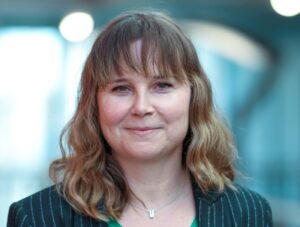
Catherine Fassbender often extends beyond academia because of her family name. However, she has maintained a private and professional public profile. She is not a media celebrity, and her identity in public records is rooted in research, teaching, and academic service rather than entertainment coverage.
This makes her profile distinctive. She belongs to a family that attracts interest, yet her own life has followed a very different path. Instead of cinema and red carpets, her achievements are found in lecture rooms, research centres, neuroscience laboratories, and peer-reviewed scholarship.
Also Read:
Sara Hollamby: A Distinguished Career in Television, Training, and Style Expertise
Conclusion
Catherine Fassbender is a highly accomplished academic whose career reflects discipline, intelligence, and meaningful scientific contribution. From her early studies in Ireland to her advanced research roles in the United States and her current position at Dublin City University, she has built an impressive professional life in psychology and cognitive neuroscience.
Her work in cognitive control, ADHD, adolescent behavioural risk, and substance abuse research has real importance in both academic and clinical settings. More importantly, her story shows that public interest in a family name can lead to the discovery of an individual whose own accomplishments are substantial and deserving of recognition. Catherine stands out not because of borrowed attention, but because of a serious and successful career built through research, scholarship, and academic leadership.
Frequently Asked Questions
Who is Catherine Fassbender?
Catherine Fassbender is an Irish academic and psychology researcher. She is known for her work in cognitive neuroscience, ADHD, substance use research, and university teaching, and she is also the sister of actor Michael Fassbender.
Is Catherine Fassbender a neuropsychologist?
Catherine Fassbender is widely described as a cognitive neuroscientist and psychology academic. Her research focuses on cognitive control, brain function, ADHD, and behavioural health, which places her closely within the neuropsychology and neuroscience field.
What is Catherine Fassbender’s family background?
Catherine Fassbender comes from an Irish-German family. Her mother, Adele Fassbender, is from Larne in County Antrim, and her father, Josef Fassbender, is a German chef. Her brother is actor Michael Fassbender.
Also Read:
Oliver Tress: The Visionary Entrepreneur Behind the Success of Oliver Bonas